How Floor Sanding Changes Wood Colour
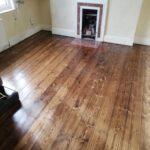
Some old wooden floors seem to have been dipped in orange syrup.
The grain is still there, technically. You can see it if you look hard enough. But it sits under a glossy amber coating that has darkened over the years, caught scratches in the light and made the whole room feel warmer than you ever asked it to be.
Then the floor sanding starts and the colour changes almost immediately. The old shine disappears. The orange tone weakens. Fresh timber appears under the machine and suddenly the room looks lighter, calmer and several decades younger.
Sanding can change a floor drastically, but it has limits. It removes the old finish. That might be varnish, stain, oil, built-up grime or a thin layer of timber changed by years of sunlight. What remains is the wood itself.
Oak will still look like oak. Pine will keep its warmer yellow and red tones. Mahogany is not going to turn Scandinavian just because the sanding machine got enthusiastic. The biggest colour change usually comes next.
A clear water-based lacquer can keep the floor looking pale and natural. Hardwax oil adds more depth and warmth. White-pigmented finishes can soften yellow tones, while a darker stain can completely shift the mood of the room.
So the final colour depends on two things: How far the sanding takes the floor back, and what you choose to put on it afterwards.
What caused the colour change?
It’s usually due to several overlapping reasons. The coating may have ambered. The timber may have changed colour with light exposure. A stain may have been applied years ago. Clear oils can deepen and warm the wood. Dirt and wear can exaggerate the darker tone around traffic areas.
If you do not separate those effects, it is easy to expect too much from sanding.
The finish may be doing most of it
Traditional clear finishes can add considerable warmth to timber, while some modern waterborne systems are designed to stay much more neutral. Bona waterborne finishes such as Traffic HD are clear, colourless and non-yellowing, while Junckers has its HT700 water-based lacquer with high UV stability to minimise yellowing over time.
Keep that difference in mind when you compare a floor coated many years ago with one finished today. Strip away an ambered or heavily coloured coating and the timber underneath can look surprisingly pale even before any white pigment is introduced.
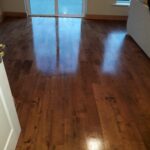
Gloss makes the effect stronger too. A high-sheen surface reflects light in a way that emphasises depth, saturation and colour contrast. Change the same floor to an ultra matt or raw-look finish and it can appear noticeably softer and lighter, even when the wood itself has not changed shade very much.
The timber has been changing as well
Wood is photosensitive. Light alters lignin and naturally occurring extractives in the surface, and different species respond differently. Colour change begins at the surface while the wood below is comparatively unchanged. Indoor wood can also change colour through visible-light exposure even where window glass reduces much of the ultraviolet radiation.
That is why the patch under a rug can look different from the boards beside it. The uncovered timber has spent years seeing daylight while the protected area has not.
Sanding can remove some of that changed surface, but the amount needed depends on the species, age, original finish and depth of discolouration. It should never become an excuse to grind away useful timber simply because one board looks slightly warmer than another.
What floor sanding actually removes
A proper resand does several jobs at once. The first abrasive cuts through the existing coating. Further passes remove the scratch pattern from the previous grit, flatten minor surface irregularities and prepare clean timber for the new finish.
Colour can disappear at each stage.
Old lacquer comes off. A previous stain may be reduced or removed if it has not penetrated deeply. Surface grime and embedded contamination go with it. Very shallow light-related colour change may also be cut away. What remains is the natural colour variation inside the boards themselves.
This is the moment when people often realise that the floor they thought was orange oak was actually quite pale oak wearing an old-fashioned coat.
There are limits. Some stains penetrate more deeply into earlywood, pores and grain. Repairs may have been made with a different species. Water marks and pet stains can sit deeper than the material a sensible sanding should remove. A darker edge around a knot is part of the timber, not a coating defect. Trying to chase every colour difference with a belt sander is how restoration turns into unnecessary timber removal.
Freshly sanded does not mean finished colour
Freshly sanded wood is seductive. It is pale, matt and dry-looking. People see it and say, “Yes. Exactly that!”
Then the first coat goes down and the colour deepens.
That is normal.
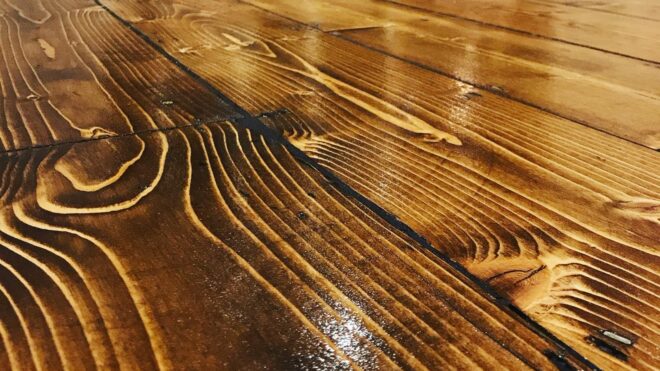
Clear oils usually create what manufacturers call a wet effect, where the grain becomes richer and the wood appears warmer and darker. Clear oils enhance the natural tone of wood, and finishes like Osmo Raw Matt version contain a small amount of white pigment specifically to counteract that effect on light-coloured species such as oak, ash and pine.
Clear lacquers vary too. Some remain very neutral, some subtly intensify the wood, and some primers are deliberately formulated to produce a warmer or richer tone before the protective topcoat is applied.
Four very different floors can start identically
Once a floor has been taken back to clean timber, the next treatment can push the appearance in several directions. The same sanded oak floor could finish pale and raw-looking, softly whitewashed, warm and oiled, or much darker than before.
1. Clear and natural
A clear finish does not always mean invisible. Some clear products deepen the grain or create a slightly richer colour, while newer raw-look lacquers are designed to keep the appearance closer to unfinished timber.
Bona, for example, offers a Traffic HD RAW ultra-matt finish intended to preserve the look and feel of natural wood. Its NaturalSeal also contains a small amount of white pigment to imitate the depth of freshly sanded wood rather than allowing the surface to swing strongly amber.
This route suits homeowners who like what appears after sanding and want to preserve as much of that dry, pale character as the coating system allows.
2. Whitewashed or Nordic
White pigment changes the relationship between the grain and the background colour rather than simply painting the floor white. A good whitewashed treatment still leaves the timber recognisable. The earlywood, latewood, pores and knots remain visible, but the overall cast becomes cooler and paler.
Current professional systems are designed specifically for that look. Bona White and its Modern Pale treatment use white pigmentation over sanded timber, while Junckers WB Primer is available in White and Nordic versions for creating a lighter atmosphere.
Irish floor sanding contractors give you different finishes among their restoration options.
The caveat is timber species. White treatments behave differently on oak, pine, beech and darker exotic woods. Grain orientation affects how pigment sits. Tannin-rich woods can react with some products. A test area using the exact sanding and coating system is far more useful than choosing a colour from a small printed swatch.
3. Warm oil without the old gloss
Some homeowners want to lose the orange varnish but keep warmth in the timber. An oil or hardwax oil can do that without recreating the same plastic-looking gloss.
The wood generally becomes richer as soon as the oil wets the surface. Grain contrast increases. Oak often takes on a richer, honeyed tone. Pine can look much more golden. That does not mean the floor has to look dated.
Keep the sheen low and the result can still feel soft, natural and modern. Colour and gloss are separate choices. A warm matt oil can look completely different from an old amber varnish, even if both bring out the natural colour of the wood.
4. Stained darker on purpose
Floor sanding also gives you the chance to move the other way.
Once the old finish is removed, a compatible stain can introduce grey, brown, smoked, walnut or near-black tones before the protective finish goes on. This can completely change how the grain reads plus your sense of how ‘formal’ the room feels.
Dark staining is less forgiving than many people expect. Coarse sanding scratches, edge marks, filler and patches of old coating can absorb colour differently and become more visible rather than less. A floor being stained needs exceptionally consistent sanding preparation.
That is why the colour plan should be decided before the final sanding grit. The preparation required for a coloured primer or stain may differ from the preparation for a clear finish.
Pine will never become pale oak
We blame ‘inspiration photographs’ here.
A homeowner sees a pale Scandinavian oak floor online, looks at an orange pine floor at home and assumes sanding will create the same result. It can create a lighter pine floor. It cannot change pine into oak.
Species controls grain pattern, pore structure, natural colour, knots, density and the way finishes are absorbed. Pine often carries yellow, red and resinous tones. Oak can range from beige and straw to brown. Ash is typically paler and more open-grained. Beech often has pink or warm undertones. Exotic species may retain deep reds or browns even after aggressive coating removal.
White pigment can cool those undertones, but the wood remains itself underneath. That is usually a strength. The best restoration works with the species rather than trying to disguise it as something else.
Product instructions direct you based on suitability. Junckers says colour intensity with its coloured oils varies by species, and Osmo recommends trial applications for Raw Matt finishes because the result depends on the original timber.
Sheen can change the room almost as much
Colour gets all the attention, but gloss level is one of the fastest ways to make an old floor feel different.
A high-gloss finish produces sharp reflections. Scratches, dents and surface waviness catch the light. The wood often appears richer and more saturated because the coating creates visual depth.
Move to matt, ultra matt or raw-look and the reflections soften. The grain still shows, but the floor is quieter. In a bright room, that can make the surface appear paler even when the actual pigment level has barely changed.
This is why a restoration does not always need white stain to feel contemporary. Removing an ambered gloss coating, sanding back to clean timber and using a neutral low-sheen system can be enough to transform the room.
Modern floor lacquers make that easier. Junckers HT700 is available in ultra matt, matt and silk matt, while Bona offers extra-matt and raw-look systems intended to avoid the heavy visual build associated with older glossy coatings.
Old stain can be stubborn
A floor that was deliberately stained dark years ago will not always return to perfectly uniform pale timber after one standard sanding sequence.
Stain can penetrate at different depths depending on species, grain and how it was originally applied. Open grain may hold more colour. End grain at board ends can absorb heavily. Areas that were repaired or replaced may react differently. Old pigment may remain in deep pores even after the broader surface looks clean.
Trying to remove every trace mechanically can take away far more wood than the floor needs to lose.
This is particularly important on engineered timber, where the hardwood wear layer is finite. If colour remains on the surface after a sensible sanding depth, the right approach will be to work with it, use a new compatible colour system, or accept a degree of variation rather than sanding towards the core.
The pale look still needs maintenance
A newly pale floor won’t stay that way for long.
Wood continues to respond to light. Furniture and rugs create protected areas. Clear oils can develop warmth. White-pigmented treatments wear gradually in traffic lanes. Dust can become more visible on very pale textured surfaces. The finish system determines how easily that appearance can be refreshed.
Even pale finishes for white wooden floors need maintenance because pigment and protective wax can wear over time.
The maintenance plan should match the aesthetic choice. A raw-looking matt oak floor may need different care from a dark stained lacquered floor, just as a white kitchen worktop asks for different habits from black granite.
Can you stop the floor yellowing again?
You can slow and manage the effect, but no honest finish can promise that natural timber will never change at all.
The first decision is the coating. Non-yellowing waterborne lacquers reduce the ambering that older solvent-based or oil-rich finishes can produce. Pigmented primers and raw-look oils can counter the warming effect of clear finishes. Some modern systems are also formulated for better UV stability.
Second factor is light exposure. Rugs, large furniture and permanently shaded areas age differently from exposed boards. Moving rugs occasionally, using blinds during intense sun and accepting a small amount of natural timber evolution will generally produce a more realistic long-term result than expecting the colour to remain laboratory-perfect forever.
Some pale treatments are not for every floor
A dramatic before-and-after photograph can make every whitening treatment look interchangeable. It is not.
Junckers, for example, offers Wood Lye to reduce the natural yellowing of pine and spruce, but specifically warns against using it on oak because tannic acid can cause discolouration. The same product is also not recommended for engineered floors because lye treatment requires sanding to clean wood and the construction may not tolerate it.
Whitewash, lye, raw oil, white primer and pale lacquer may all sit under the loose label of a Scandinavian finish, but they are different treatments with different chemistry and suitability.
The floor species, construction and existing condition should guide the choice of the system.
Test the finished system, not just the colour
The useful test is not simply a dab of stain on an offcut. It should reproduce the sanding preparation, colour treatment, primer and final topcoat as closely as possible. A white oil may look perfect on raw oak and slightly warmer once lacquered. A clear finish may deepen pine more than expected. A pale pigment can catch differently in brushed grain or filler. Lacquering over some white oil systems can introduce a yellowing effect.
A test patch reveals how the floor looks in the actual room, beside your wall colour, furniture and daylight. Pale oak under cool north light can feel very different from the same treatment beside warm cream walls and afternoon sun.
How far can the transformation go?
Sometimes, remarkably far.
A heavily ambered glossy floor can become a pale matt surface with far less visual weight. A yellowed oak parquet can be sanded and treated with white pigment to produce a much cooler appearance. Pine can lose a dark old varnish and return to a lighter, cleaner version of itself. A once-glossy hallway can keep all its old boards while looking as though the entire floor has been replaced.
Floor sanding removes the layers that were added to the timber and some of the change that has happened at the surface. It reveals what the floor really is. The finish then decides whether to leave that colour alone, cool it, warm it, whiten it or deliberately take it darker.
That is the useful way to think about the shade on the floor. You are not sanding towards a fashionable colour. You are sanding back to the material, then choosing what relationship you want to have with its natural tone.