
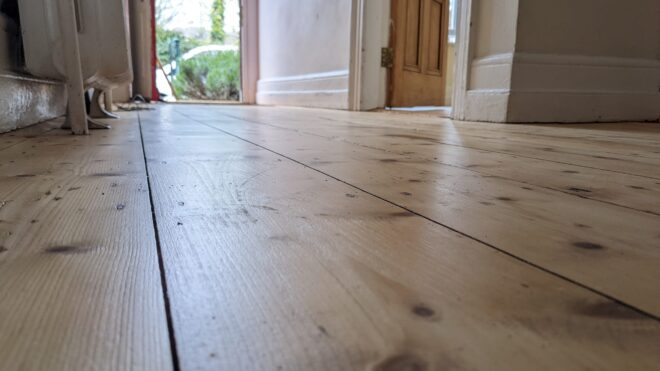
Floor Sanding Dublin | Can Floor Sanding Fix Sun Fading?
Move a rug that has been sitting in the same place for a few years and a wooden floor and what’s underneath can surprise you. That pale rectangle, a darker rectangle or a sharp border tracing the exact footprint of the rug. The rest of the room has aged. The timber underneath has been living in the shade.
It can look like damage, especially when the contrast is strong. Sometimes it is mostly an appearance problem that will soften once the covered area is exposed to normal daylight. Sometimes the finish itself has changed colour. And sometimes the difference is in the wood surface deeply enough that floor sanding and refinishing are the sensible way to reset the room.
The awkward part is that timber does not fade in one predictable direction. Oak may warm and amber. Walnut can become lighter and more golden. Some woods deepen noticeably. A clear coating may yellow while the timber below changes in another way entirely.
Before reaching for that sanding machine, it helps to work out what actually changed, how severe the contrast is and whether the floor has enough usable timber left for a full renovation.
The rug did not stain the floor
In most cases, colour difference around a rug, sofa or large piece of furniture is not a stain caused by the object itself. It is differential ageing. One part of the floor has been exposed to light for years while the covered part has received much less of it.
Wood is photosensitive. Ultraviolet light can trigger chemical changes in lignin and other constituents close to the surface. The result is visible colour change. Visible light also contributes to the process..
Indoors, the effect is much less dramatic than outdoor weathering because the floor is protected from rain and full environmental exposure. It is still cumulative. A bright strip beside patio doors, a bay window or a sunlit kitchen can change gradually until you only notice it when something moves and reveals the protected timber beneath.
That’s why you have floor manufacturers recommending moving rugs and furniture periodically to avoid distinct lines between exposed and unexposed areas.
Fading can also mean darkening
The word fading suggests that every floor slowly bleaches.There are variations.
White oak undergoes a medium colour change with slight ambering. Ash moves from its fresh, pale tone towards straw and tan. Walnut’s darker heartwood can soften towards a warmer golden brown. Jatoba, often sold as Brazilian cherry, can deepen strongly towards red. These are natural changes in the wood itself, not defects.
Finishes can change too. An older coating may become warmer, yellower or more amber over time, while modern water-based finishes tend to preserve a paler appearance more effectively. Pigments, stains and coloured oils add another layer because the colourant itself may respond to light differently from the timber beneath it.
That creates a few possible versions of the same rug-shaped mark. The exposed timber may be lighter. It may be darker. The coating may have yellowed around a protected patch. A stained floor may have lost colour where the sun was strongest. On some floors, several of those things are happening at once.
This is one reason colour alone is not enough for a final restoration plan. The finish condition, timber species, construction and sanding all factor in.
Do nothing first? Sometimes, yes
A newly uncovered rectangle does not always justify immediate floor sanding. If the floor is otherwise in good condition and the colour difference is modest, exposing the formerly covered area to the same room conditions can allow the contrast to soften as that timber begins its own light-driven colour change.
There is no reliable universal timetable for this. That oak floor matching in exactly three weeks, or that a walnut patch disappearing by next month is not fixed. Species, finish, window orientation, season, glazing and the age of the floor all affect the pace.
Even with UV-coated hardened wood floors, areas left covered can remain lighter and rugs should be moved from time to time to encourage more uniform colour change.
If the difference appeared only because you have just moved a rug, leave the patch exposed for a while before making an irreversible decision. Move nearby furniture if practical so the whole area receives a more balanced share of daylight. Keep expectations sensible. Exposure may reduce the contrast; it will not necessarily recreate a factory-new, perfectly uniform floor.
This option makes the most sense when the finish is healthy, there are no deep scratches or worn-through areas and you can live with the mismatch while the colour develops. It costs nothing and removes no timber.
Look at sheen before colour
A floor can appear to have a colour problem when part of what you are seeing is actually a finish problem.
The exposed route around a rug receives foot traffic, cleaning, grit and sunlight. The protected area receives much less wear. When the rug comes up, the covered patch may look richer and glossier while the surrounding floor appears flatter and paler. Viewed from one angle, the difference looks like colour. Viewed in raking light, it may be obvious that sheen is doing much of the work.
Try looking across the floor towards a window rather than straight down at it. If the contrast changes dramatically with viewing angle, surface gloss and abrasion are likely contributing. If the tone stays obviously different in every light and the grain itself appears lighter or darker, the timber or stain has probably changed as well.
That distinction is important because a sound finish with superficial wear may be a candidate for a lighter renovation. Recoating is superficial sanding of the existing protective layer followed by a new coat. It restores protection and sheen without taking the floor back to bare wood.
Recoating cannot undo a major colour difference that exists in the timber. It can, however, solve a dull-versus-glossy mismatch that is being mistaken for sun fading. A proper inspection avoids sanding away healthy wood to fix the wrong problem.
When floor sanding can fix it
Floor sanding is most useful when the uneven colour is clearly established in the aged finish and upper wood surface, the floor is suitable for another sand and the contrast is strong enough that waiting is unlikely to deliver the result you want.
Sunlight-related fading and discolouration are some the reasons a hardwood floor may need refinishing. Wood can bleach, fade or darken depending on species and sanding and refinishing is a remedy for sun damage.
The reason it works is fairly physical. A full sand removes the old finish and a thin amount of timber from the surface. Because light-driven colour change is concentrated near the exposed surface, fresh sanding can reveal timber that has not aged in exactly the same way. Once the room is sanded uniformly, it can then be refinished as one surface.
That is the reset people are usually hoping for when the rug outline is obvious from the doorway.
A professional restoration will treat the entire connected floor area rather than chase only the pale rectangle. The sanding sequence has to remove the coating consistently, erase coarse abrasive marks and leave a uniform surface ready for the chosen primer, stain, oil or lacquer. The final appearance depends as much on the finishing system as the sanding itself.
Why patch sanding usually disappoints
The tempting shortcut is to sand only the darker or lighter rectangle until it looks closer to the surrounding floor. On a finished timber floor, that can exchange one outline for another.
Local sanding changes surface level, scratch profile and porosity. If the rest of the room still carries an aged coating or stain, a fresh patch will accept new finish differently. The repair may look convincing while raw, then become noticeably lighter, darker or glossier as soon as the coating goes on.
There are exceptions. A skilled restorer may be able to make a small local repair where boards have been replaced or damage is contained within a natural boundary. But a large, crisp sun-fade rectangle in the middle of an otherwise continuous room is rarely the place to practise invisible patch refinishing.
Stain can help, but test it
After sanding, you have a second decision: keep the timber close to its natural colour or introduce a stain, tinted primer or coloured oil.
Colour can be useful when a floor contains mild residual variation or when you want to move the room deliberately lighter or darker. It is not camouflage for poor sanding. Dark stains can make coarse scratches and edger marks more obvious. Pale or white-pigmented systems can exaggerate filler, tannin variation and areas that were sanded to a different smoothness.
Colour intensity varies with wood type and you should test before treating the full floor. The sample should use the actual timber, preparation and finish system whenever possible.
If the original floor is a warm oak that has spent fifteen years becoming more amber, freshly sanded oak may look unexpectedly pale. That is not evidence that sanding failed. You have exposed younger-looking wood and reset the surface ageing clock. The finish choice then determines how much warmth returns immediately and how much develops over time.
The same ‘ghost shade’ can come back
Refinishing removes the existing contrast. It does not change the path of the sun through your windows.
Put the same rug back in exactly the same place, leave it there for another five or ten years and the surrounding timber will continue receiving more light than the covered patch. The difference may return. UV-resistant finishes and modern glazing can slow colour change, but no clear interior finish should be sold to you as permanent immunity from light-driven ageing.
Move rugs and furniture periodically, using curtains or blinds to reduce direct exposure and considering glazing that limits solar radiation when windows are being replaced.
For most homes, you do not need to reorganise the sitting room every Sunday. The useful habits are more manageable:
- Shift area rugs occasionally rather than leaving every edge in the same place for years.
- Rotate furniture where the room layout allows it, especially beside large glazed doors or bright windows.
- Use blinds, curtains or shutters during periods of strong direct sun if a particular section of floor receives hours of concentrated light.
- If you are considering UV-control window film or replacement glazing, check the actual product specification rather than assuming every low-emissivity or tinted glass product blocks the same wavelengths.
- After refinishing, follow the finish manufacturer’s full cure time before replacing rugs. Different oils and lacquers have different requirements.
Moving rugs is particularly effective because it balances exposure rather than trying to stop normal timber ageing altogether. A wooden floor will change colour. The realistic objective is to avoid creating permanent geometric shadows across it.
What a contractor will inspect
If the mismatch has reached the point where you are considering floor sanding, the inspection will look into:
- Timber and construction: Is it solid wood, engineered, parquet or old boards, and how much sandable material remains?
- Existing finish: Is the surface lacquered, oiled, stained, waxed, prefinished or difficult to identify?
- Previous sanding: Are there thin edges, exposed tongues, deep bevel removal or signs that the floor has already lost significant thickness?
- Wear patter: Is the colour difference actually accompanied by worn-through finish, scratches or grey bare timber?
- Moisture and staining: Are any dark areas being blamed on sunlight when they are really water marks, plant-pot damage or another contamination?
- The planned new finish: Will the floor stay natural, be stained, whitewashed, oiled or lacquered, and has that appearance been tested on the sanded timber?
That inspection ensures that the restoration does not cause indiscriminate wood removal.
The floor will keep ageing
Keep in mind that uneven sun fading is not a one-time accident. It is part of living with real timber.
A rug creates a protected zone. Sunlight reaches the surrounding floor. The wood and finish respond over time. Move the rug and you suddenly see the difference that has been developing quietly for years.
If the contrast is mild, let the newly exposed timber catch up before doing anything drastic. If the coating is healthy but dull, a recoat may be enough. If the room has a strong, established colour mismatch and the floor has enough timber for renovation, full sanding and refinishing can give you a much more even starting point.
Then move the rug occasionally.